

Tuesday, January 27, was International Holocaust Remembrance Day. I interviewed John Swanson, Professor of History at The University of Tennessee, Chattanooga, who is writing a book about one of the most well-known contemporary records of the Holocaust: the Auschwitz Album.
Even if you’ve never heard of the Auschwitz Album, Swanson says, you’ve probably seen it, because photos from the Auschwitz Album are displayed in many different museums and exhibitions throughout the world.
But did you know that early on this photo album was actually called “Lili’s Album?”
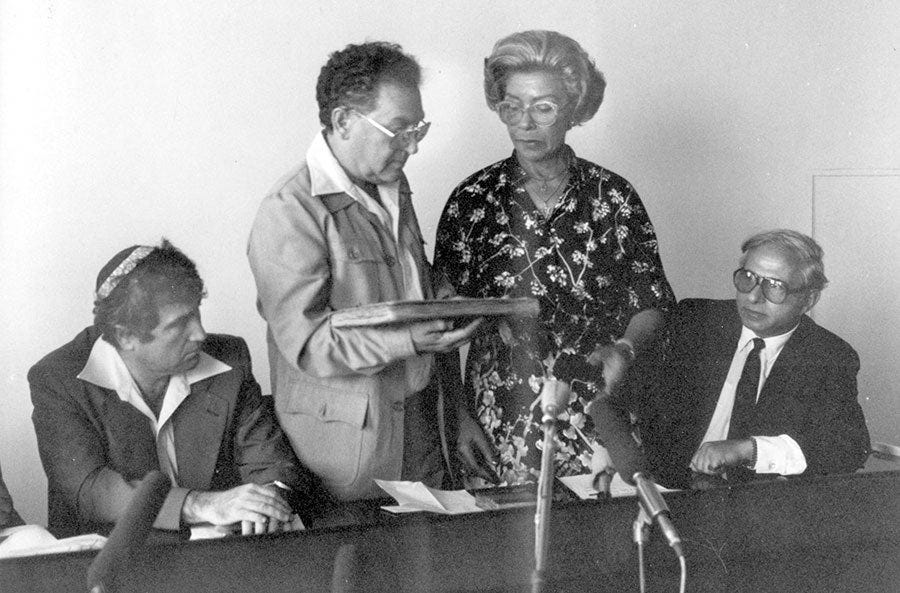
I interviewed Professor Swanson about the Auschwitz Album and the remarkable story of Lili Jakob, the survivor who discovered the book by accident in the Mittelbau-Dora concentration camp after liberation. She discovered photographs, taken by SS officers at Auschwitz, of a transport of Jewish residents from her home village of Bilky, today in Western Ukraine. In the book, she found photographs of her rabbi, cousins and siblings, and even herself.
After the War, Jakob emigrated to Florida in the United States, but she kept the album. She treated it as an important historical record. For Lili, it was also something both personal and shared. She treated it like a “family album,” Swanson says, keeping the book in a drawer in her Miami living room.
But it was not just her own family album. Lili believed that the photos belonged equally to other survivors. When word about the photographs spread in the survivor community, some made the trip to Miami to visit her. Lili would sit with them, Swanson says, and they would look through the photos together to see if they could recognize anybody.
“If somebody found a photograph of a relative or somebody they knew in the photograph, she ripped it out of the album and gave them the photograph.”
Today, you can see images from the Auschwitz Album in many Holocaust remembrance exhibits and museums. Jakob gave the rest of the collection to Israel’s World Holocaust Remembrance Center in 1980. But Swanson believes there are a few photos still out there.
“Maybe there are just a couple of photos that are just gone,” he told me. “They were given to somebody and never returned to the album.”
Why do we know so little about Lili Jakob herself? Even though she has a profound and personal connection to one of the most important documents of the Holocaust, no major American newspaper carried Jakob’s obituary when she died in 1999. And then there is Bilky itself and the Jewish community in this area. How did Lili Jakob and her family live before the War? Professor Swanson and I discussed these and other important questions in today’s podcast episode of the “At the Edges.”


